Africa, Safari

A typical day on safari (AKA how to fall in love with Africa)

Quite often, when I meet people at dinner parties, they’re rather cynical about my passion for African safaris, so rather than giving the standard spiel about the night I got stalked by a lion, the way I try to explain to them (convert them to the safari cause) is by telling them about a typical day on safari.

06:00- Wake up. Normally 6am is unacceptably early. I’m generally pulling the duvet covers back over my head and ignoring whoever is attempting to talk to me. On safari I’m lured up by the waft of fresh African coffee and the beaming smile with which it is delivered to my tent.

06:15- On back of open four wheel drive for game drive. Bit chillier than my bed. Air smells of damp dust. Oddly excited.

ame drive in the Masai Mara from Offbeat Mara
Game drive from Offbeat Mara, Kenya

11:00– Back at camp. Can you believe it? We saw a leopard and a family of elephants and had a proper cooked breakfast in the bush.  And an eagle stole my bacon, and we passed a lion cub but it didn’t care, and did you know giraffes don’t make a sound? And, and, and….

13:30- Gosh this lunch is fun. The pasta’s scrumptious, the wine is good, and I really shouldn’t have laughed at that story I just heard but I couldn’t help it and now my sides hurt.

14:45- On bed. Nap is nothing short of utterly languorous.  Half way through I woke up up blissfully warm, utterly relaxed, and listened to the crunch of an ellie eating branches outside my room. Not 100% sure if this is real or a slightly sleepy dream.

16:30- Tea done, cake eaten, off on game drive. Anticipation in the air. Fingers crossed we see a rhino.
Safari sundowners
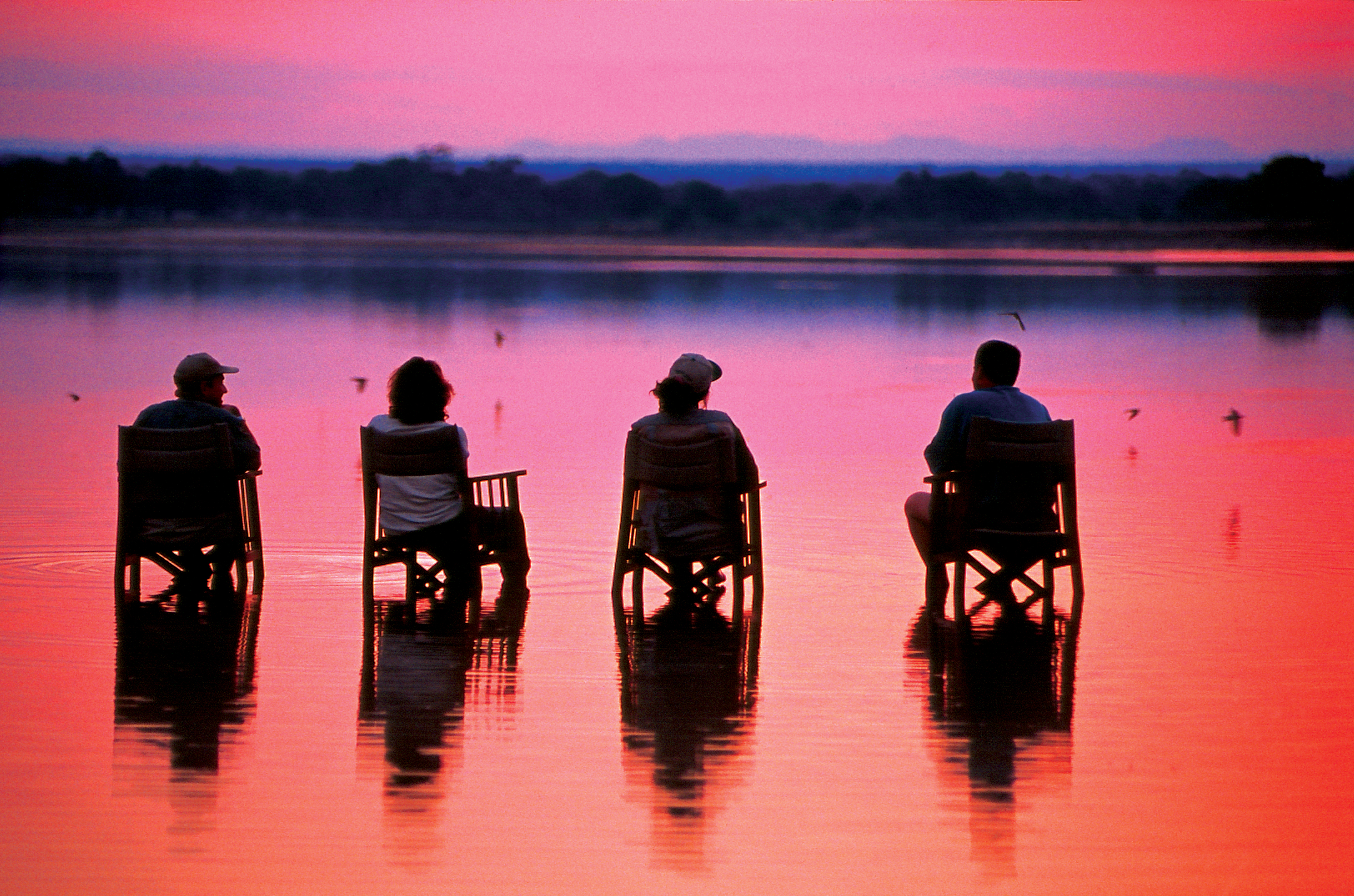
Sundowner with RPS in Zambia

18:30- Not the remotest sign of a rhino all afternoon. I wanted to see a rhino. Fortunately we saw baby ellies. And while I’m not the sort to repost pictures of adorable animals on Facebook, baby ellies really are implausibly cute. Did you know when they get tired they suck their trunks like a human sucks their thumb? And they rest their trunks on their tusks when they get sleepy? Anyway, right now the sun’s going down, and we’ve stopped to perch on the bonnet of our landrover. Cold beers and cashew nuts, looking out over golden grasses and setting sun. The world is OK.

20:00- Back in camp. Showered under the stars. Sharing dinner with my guide, and some fascinating guests. Roughly this is the best dinner party I’ve ever been to.

23:00 – To bed- night!

23:15- Noises outside. Is that definitely a hippo? Or a lion who might want to eat me…?

Tempted? View our Extraordinary picks.

Africa, Honeymoons

How to pick a honeymoon: the Extraordinary guide

Picking a honeymoon should be a fun part of the wedmin. Up there with the food tasting and working out which of your single friends you’re going to set up with each other.  However, I often have people call me agonising over how they’re going to choose the perfect honeymoon, so I’ve put together a guide to make life a little easier:

  • First and foremost- relax- it doesn’t have to be “perfect” (whatever that is)- your honeymoon will be great, wherever you go. Even if you end up in a tent on Dartmoor (nothing wrong with that- one of my favourite holidays was spent there). It’s easy to get caught up in making a honeymoon perfect, but the reality is you’ll have a great time because you’re together, whether it involves gold taps and butlers or a simple picnic under the stars.
Chitwa Chitwa Honeymoon
Chitwa Chitwa- in our honeymoon hall of fame.
  • Try to incorporate both of your interests. This might sound obvious, but I once took a call along the lines of: “My fiancée wants to go on honeymoon to Italy. Anywhere except Africa in fact. But I want to go to on safari so I’m booking it anyway.” And then a few moments later he added “By the way, this is my second marriage, so it’s really important this one goes well.” Fortunately the unwitting bride loved the honeymoon in Tanzania we planned, but trying to make sure you’re both getting a little of what you enjoy is usually the best way to ensure you both have a fabulous time.
  • Be realistic about your budget. There’s a huge pressure to push yourselves and your budget to make your honeymoon impossibly special. However, the reality is that weddings can be expensive, and there is nothing more likely to ruin the romance of a honeymoon than squabbling because you spent so much money on your hotel you can’t afford a second gin and tonic. If you’re really set on going all out, and the budget won’t quite reach, consider a honeymoon gift service instead of a conventional wedding list.
Kaya Mawa, Malawi, one of our favourite honeymoon chill-out spots
  • Make time to take it easy at least somewhere during your honeymoon. Even the most adrenaline-fuelled couples can be exhausted by a wedding, and a long-haul international flight can never be described as relaxing. Safari and beach honeymoons work especially well for this- a combination of once-in-a-lifetime adventure and a chance to properly unwind before you return to reality.
  • Be flexible. If you have a dream honeymoon in mind, and you can’t make it work right after your wedding-don’t worry. I work with plenty of people who can’t get enough time off work, or their dream destination is underwater. Taking a “mini-moon” somewhere close to home and travelling long haul at a time that works better for you can be a great solution.
Namibia, Self drive, Trip Reports

Namibia: Phwoar.

Sorting through some old photos I found a series from my road trip around Namibia. In a fit of extreme modesty, I thought “Wow- I am a great photographer”. And then I remembered that it’s probably not my astonishing photographic skills, it’s just Namibia.

Without a shadow of a doubt, Namibia’s the most beautiful country I’ve ever visited. (Honourable mention for Mauritania though, which has the same amazing clear light, and a rugged coastline where the Atlantic meets the desert).

Though I’m not yet giving David Bailey a run for his money, I thought I’d share a few shots to show just how spectacular Namibia is, from the endless roads of Namibia’s Central Highlands via the sand dunes and petrified trees at Sossusvlei, to the parched Etosha pan.  I think it might actually be impossible to take a bad photo there. Of the landscape at least…

Extraordinary Picks, KZN, South Africa, Trip Reports

My latest crush: Montusi Mountain Lodge

If you have a temper tantrum because you have to leave your lodge, it’s got to be pretty good right? To be fair, my sulks on leaving Montusi were between me, the grasses and the birds,  but I couldn’t help resenting the long drive and the perfectly blameless hire car that were to break me and Montusi apart. Why couldn’t the irritatingly efficient machine break down and leave me stranded, just for a day or two?

Night time at Montusi Mountain Lodge
Starlight at Montusi Mountain Lodge

My most recent trip to South Africa had got off to something of a rocky start, with unseasonal storms in almost every place I visited.  After a long drive through rural KwaZulu Natal  Montusi welcomed me with a cosy fire and vast windows that framed the lightening crackling along the top of the Drakensberg.

Opening my eyes the next morning to glorious sunshine and the sort of view you have to photograph (just so you can show off about it later) I headed for the peak of Mount Montusi. Hiking through meadows that smelled of wild mint and listening to the clanking cowbells only cemented my love for Montusi. Sadly, it seemed as if I had just a few brief stolen moments to admire the view and the bushman rock art (in the UK it’d be behind glass and a velvet rope, here it’s on an open cave wall), and then I had to leave.

Au Revoir Montusi, I’ll be back!

Culture, KZN, Self drive, South Africa, Trip Reports, Wildlife

The signs of modern South Africa: A Road Trip around Kwa Zulu Natal

We love visiting Africa, especially on a self drive trip- it’s the best way to experience a country as locals do, rather than flying into remote luxury resorts and never seeing a local village or experiencing an elephant firmly blocking the road. Sometimes it can be exhausting, at others frustrating (a huge thank you to our wonderful client Calynne for putting up with crackly phone calls from deep in the bush), but generally, it’s just wonderful. Most recently we took a road trip around Kwa Zulu Natal and felt as if we’d finally discovered the soul of South Africa (as someone else said- “KZN is where Africa starts…”) Rather than droning on ourselves, just click to let the signs of modern South African speak for themselves…


Campfire tales, Kenya, Lions

The man-eating lions of Tsavo

The British Government began building a railway at vast expense in the face of significant local hostility. Yet despite huge practical obstacles and opposition in parliament the plan soldiered on. Sound familiar?

Yet this was 1896. Building what later became known as the “Lunatic Express”, the British colonial Government in Kenya stuck unrelentingly to their plan. A railway from the Kenyan port of Mombasa to Uganda, was required, and a railway there would be. Even one that included a siding next to the High Commissioner’s mansion so he could head out on hunting parties in privacy. (Thank you Wikipedia, please let that be true). Attacks by local tribesmen, malaria, and huge geographical obstacles wouldn’t get in the way.

Lion on safari in Africa
Lions, not man-eaters. As far as we know.

In 1898 the railway workers hit an obstacle. They needed to build a bridge over the Tsavo River. While building bridges by day was hard work, by night the worker’s camp was troubled by something far more terrifying. Two maneless lions, later known as the Ghost and the Darkness, were killing and eating the Indian railway workers. They built campfires to scare off the lions. They built thick thorny bomas in the style of the local Maasai to shelter their tents. The leader of the project, Lt. Col John Patterson hid out in a tree with his trusty Martini-Enfield rifle. But to no avail.

Hundreds of workers ran away in terror, but still the lions kept coming.  Eventually Patterson shot one huge lion, 9ft 8 from nose to tail. He escaped wounded and returned to camp to stalk Patterson, before eventually dying. It took 8 men to carry his body back to camp. 20 days later the second lion was shot. He was shot 9 times over 11 days before he was eventually killed. They were found to have eaten 10.5 and 24.2 humans respectively. (What happened to the other 0.3 of a person, we can’t possibly comment).

To this day there’s no answer as to what made the Tsavo lions man-eaters. It could’ve been that one was suffering from appalling toothache, than an outbreak of rinderpest meant they had no cattle to prey on, or that they’d grown used to the taste of human flesh by preying on slave caravans heading overland to the coast. The lions ended their days as rugs on Patterson’s floor, and can now be seen in the Chicago Field Museum.

** Please accept our apologies for any inaccuracies. Like all good campfire stories, we’ve told it to the best of our abilities, but we’re prepared to be corrected!

Adventure, Green Season, Uganda

Save £575 per person on a luxurious wilderness adventure in Uganda

Uganda’s long been one of our favourite African countries and it seems the world is catching on to it. Not only is Uganda home to some of the very last mountain gorillas in the world, it also has the sort of game reserves that people come to and sigh “this is what the Serengeti used to be like”… Kidepo (recently acknowledged by CNN as the 3rd finest game reserve on the entire continent- fine praise up against such heavyweights as the Kruger, Masai Mara or Ngorongoro Crater) has spectacular game viewing and a fraction of the vehicles you’d find elsewhere in Africa.

Why? Well it used to be virtually impossible to visit unless you chartered a private plane, but scheduled flights announced in December 2013 have put safari in Kidepo firmly on the map.  Combine this with some of the spectacular special offers available during the green season in Bwindi and you’ve got a great value, utterly magical trip on your hands.

Safari in Kidepo NP
Kidepo

Safari in Kidepo NP
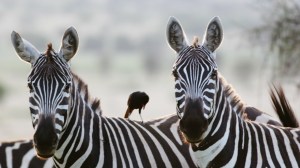
Kidepo Zebras

Day 1: Fly overnight from London to Entebbe, and crash out here for the night. Welcome to Africa!

Day 2: Connect on to your light aircraft flight up to Kidepo, a vast undiscovered savannah ringed by craggy peaks, where the wildlife clusters around the Narus and Kidepo Rivers.  Remote and with utterly wonderful scenery and game viewing, this is a park to visit now before the hoardes catch on that it’s easy to visit.  Spend 3 nights here at Apoka Lodge. Take game drives and look out for cheetah (not found elsewhere in Uganda), leopard and lion. Look out for ellies, skittish zebra and fat little warthogs with their tails firmly in the air. Take a walking safari and trace pug marks in the dust, or a night game drive to watch the glint of eyes as you pass by in the darkness.

Gorilla Trekking in Bwindi
Bwindi Gorilla © Aurelia Thomas

Day 5: From Kidepo, take a private flight down to Bwindi National Park. Not cheap, no (if you want to do this itinerary at a reduced price, we can send you back to Entebbe for a night in between), but what a way to get a sense of the magnificent Ugandan landscape.  Spend 3 nights here at the utterly wonderful Gorilla Forest Camp- so close to the national park that it’s not unknown to spot gorillas actually in the gardens. Just watch this YouTube video if you don’t believe us… We’ll include two gorilla treks while you’re here so you really get a sense of how special these wonderful animals are.

Day 8: Fly back to Entebbe and relax beside Lake Victoria, before your overnight flight back to London.

Day 9: Arrive in London early in the morning.

Normal price from £5,805 per person sharing. Travel in April, May or November, and pay £5,230 per person sharing, with discounted gorilla permits, and a free night at Gorilla Forest Camp, saving £575 per person!

Includes two gorilla permits (usual price US$500pp per permit), international flights, 7 nights accommodation, all food, internal light aircraft flights (including one private flight), game drives, walking safaris and transfers.  

Leopards, Namibia, Sabi Sands, South Luangwa

Where to spot… Leopards

There’s something about spotting a leopard on safari that sets people’s pulses racing.  It’s often men that fall passionately for this slinky cat (sorry boys!)- it’s the ultimate predator, perfectly designed for the silent stalk, the stealthy hunt and the efficient kill.

Luxury Safari in the Sabi Sands
Leopard at Singita Sabi Sand

It’s possible to spot leopards on safari all over Africa, but they’re notoriously elusive. Stories abound about leopards successfully disguising themselves, even amongst large human populations. Legend holds that when a lone leopard was spotted on Nairobi railway station, the storyteller was rubbished. 3 years later, the bones of a recently deceased leopardess was spotted under a rarely used platform… Well, so the story goes.

For those who want more reliable leopard sightings there are a number of places to visit in Africa where a safari of two or three days should give you a very reliable chance of seeing a leopard. We’ve put some effort into personally checking these out, so do ask us if you have any questions.

Okonjima Safari
Okonjima Leopard

3. Okonjima, Central Highlands, Namibia

The AfriCat Foundation at Okonjima is utterly absorbing for anyone who’s ever been fascinated by the big cats. It’s important to stress- these cats aren’t wild. They’ve been collared and are closely monitored by the research team. This makes it possible to get up close to leopard (also cheetah and wild dog) in a way that’s just not possible elsewhere, and learn more about hands on research and conservation than you would in 10 safaris.

2. South Luangwa, Zambia

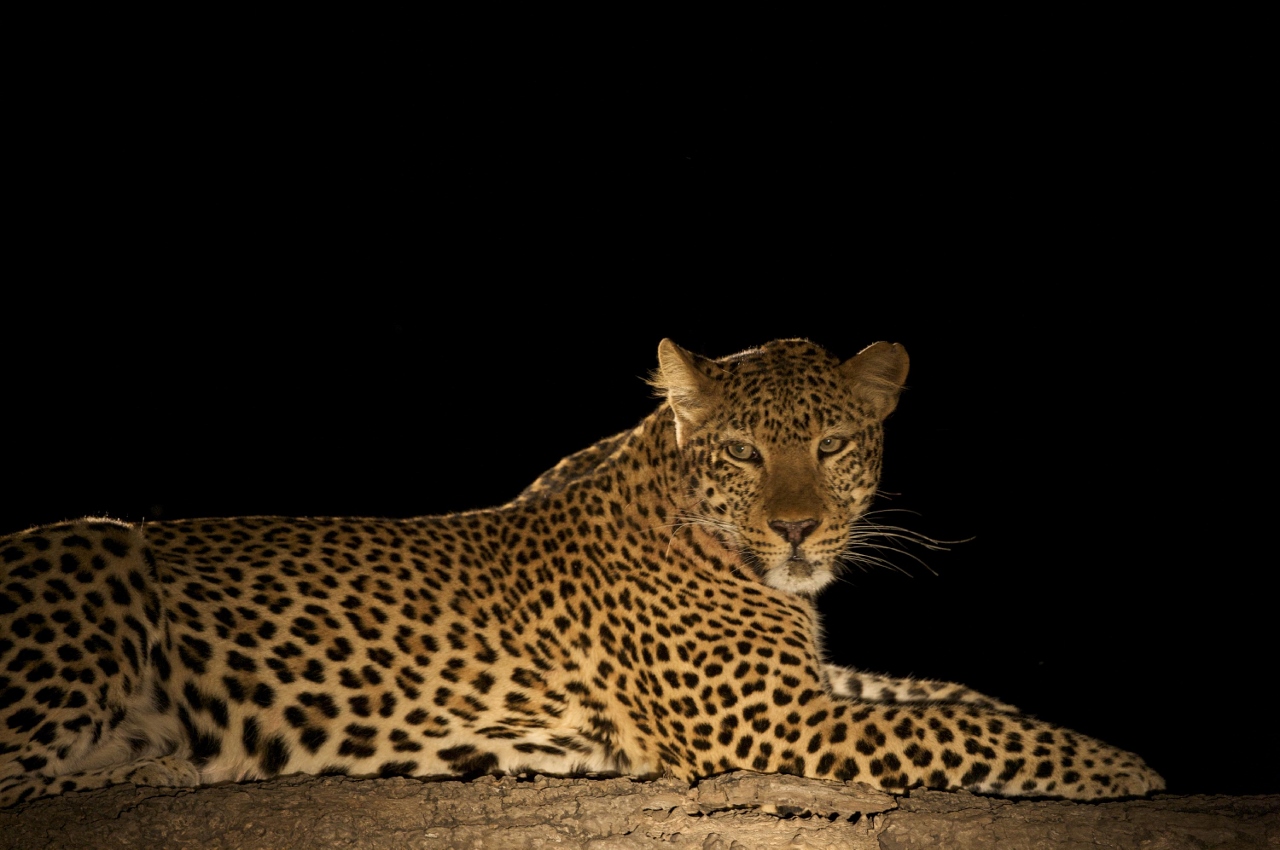
I’ve had phenomenal sightings in the South Luangwa and a colleague who (though good at rather tall tales) claims to have spotted 7 leopard in one night drive. The leopard here are often spotted on night game drives with spotlights- this is the time of day when leopard are most active, as they’re on the hunt for fresh food. By day, look for the flicker of a tail up in the sausage trees, where leopards like to lounge on long flat branches.

Luxury Safari in the South Luangwa
Leopard spotted with Bushcamps on safari in the South Luangwa

1. Sabi Sands, South Africa

Without a shadow of a doubt, of all the places I’ve done safari in Africa (and there have been a few) the Sabi Sands has been by far and away the best place to spot leopards.  I’ve tracked adults through the grasses at Lion Sands, watched leopards lounging in trees from Nottens, and most satisfyingly of all, clocked a spotted face stalking me through the reeds over breakfast at Singita Ebony. If you’re a leopard lover, go tomorrow, take my camera, and never look back.

Campfire tales, South Africa

African titbits: the Cullinan Diamond

To be honest, I only read about the Cullinan Diamond for a quiz I was setting. Jewellery’s pretty to look at, but it doesn’t really hold the same fascination as watching an elephant for half an hour.  When I started reading about the Diamond however, I was sucked in by Wikipedia, passed through numerous anonymous websites and spat out the other end by the Daily Mail. I was fascinated.

The Cullinan Diamond was discovered in South Africa in 1905, and (according to the Daily Mail, though no other sources I can reference) was so implausibly large, it was nearly thrown out with the rubbish. The superintendent rescued it and recognised the diamond for what it was:  3,106 carats and thought to be the largest diamond ever discovered. In fact, a smooth fracture down one side suggests this is only a small portion of an even larger diamond.  The diamond was named after Sir Thomas Cullinan the owner of the mine, and purchased by the Transvaal Government for £150,000. They voted to send it to King Edward VII as a token of their loyalty, and although this was shortly after the end of the Boer war, this was mainly driven by the Boer population and opposed by English settlers.

The Cullinan Diamond was so valuable it had to be sent to London from South Africa by roundabout means. A parcel was ceremonially placed on a steamer ship in the captain’s safe, and guarded by detectives all of the way to London. Meanwhile the real diamond was sent in an unmarked box by normal post. The Cullinan Diamond was presented to the king, but without modern precision cutting tools, cutting it was another challenge. Eventually, Asscher and Co, after many months of studying the diamond, faced up to the task. Legend holds that Mr Asscher had a doctor and nurse on standby, and after breaking one blade successfully cut the diamond straight through. He then fainted clean away.

Today the Cullinan Diamond has been cut into 9 large stones (amongst them the Star of Africa), and numerous smaller ones, which form a significant part of the British crown jewels. Their value is priceless, but one estimate puts the combined value at well over £100 million in today’s prices.

Botswana, Green Season, Kenya, Namibia, Tanzania, Zambia

Green season safari- is it all it’s cracked up to be?

Think of African landscapes and the chances are you’ll be imagining an endless golden savannah, broken only with twisted and parched acacia trees. The wildebeest are cantering frantically in search of water and fresh grass (this is the main driver of the Great Migration) and vultures float on the thermals hoping to spot a lion kill.

There’s another Africa however, the Africa that blossoms with life in and around the rains. The green season (sometimes rather optimistically known as the “emerald season”) transforms the landscape.  Rivers burst with life and grasses and trees seem to glow in almost implausibly bright hues. Under thunderous storm clouds young animals learn to stand on shaking legs within minutes of their births, and predators look sleek and happy with a bellyful of food. This is the time when you’ll take the most spectacular photographs and see the bush at its very best (and sometimes at half the price of the peak periods).

Beyond that, the parks are largely deserted, and if you’ve done several safaris it’s utterly fascinating seeing the game reserves in a new light. Birding in particular is utterly glorious- if you’ve never seen a fish eagle swoop for its kill or a finfoot skiddle-skaddle across the water’s surface- this is your moment.

Green season safaris are at their best in Kenya and Tanzania in March and June (catch the savannah with its spring colours) or in Zambia between January and April. The ultimate experience is a boat safari in the South Luangwa– thanks to our friends at Norman Carr for the amazing selection of photos above. Elsewhere, watch the desert spring to life in Namibia, the mighty flood at the Victoria Falls or catch the mini Migration in the Kalahari.